
Introduction
Many organizations invest heavily in analytics yet struggle to see real business impact. Dashboards are built, data teams expand, and tools multiply, but executives still ask the same question: How does this help us achieve our goals.
The problem is rarely the data itself. It is misalignment. When analytics objectives are not directly connected to business priorities, insights remain interesting but ineffective.
Data strategy alignment ensures that analytics exists to serve outcomes, not curiosity. It connects metrics to strategy, models to execution, and insights to action. Organizations that master alignment move faster, spend more efficiently, and execute with greater clarity.
Why Alignment Matters More Than Tools
Most analytics failures are not technical. They are strategic.
Teams build analytics around what is easy to measure instead of what matters most.
Without alignment
- Dashboards track activity, not outcomes
- Teams argue over metrics instead of acting
- Executives distrust insights
- Analytics becomes a reporting function, not a strategy driver
Alignment shifts analytics from hindsight to direction.
Business Goals Must Come First
Analytics should never define strategy. Strategy defines analytics.
Before building dashboards or models, leadership must answer fundamental questions.
- What outcomes matter most this year
- Which risks threaten growth
- What decisions must be made faster
- Where inefficiency limits performance
Examples of business goals
- Increase customer retention
- Improve operational efficiency
- Reduce risk exposure
- Accelerate product launches
- Expand into new markets
Once goals are clear, analytics can be designed to support them.
Translating Goals into Analytics Objectives
A business goal is not an analytics objective.
Analytics objectives explain how data will influence decisions.
Example
Business goal: Improve customer retention
Analytics objective: Identify churn drivers and predict at-risk accounts
Business goal: Increase profitability
Analytics objective: Optimize pricing and cost efficiency metrics
Business goal: Reduce operational risk
Analytics objective: Monitor anomalies and early warning indicators
This translation step is where most organizations fail.
Building an Analytics Roadmap That Supports Strategy
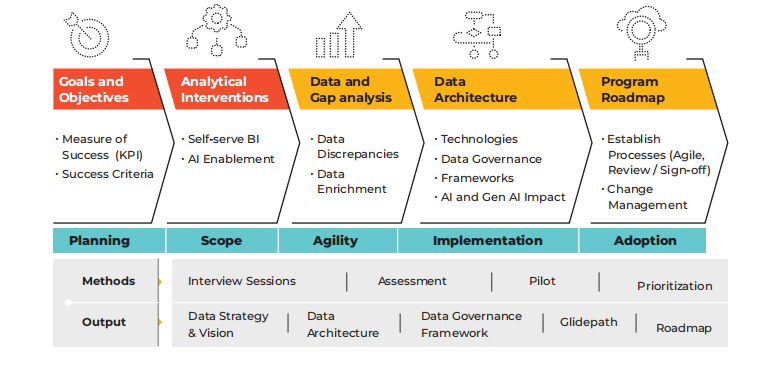
An analytics roadmap should mirror the business roadmap.
A strong roadmap includes
- Strategic objectives
- Key decisions tied to each objective
- Required data sources
- Analytics methods
- Ownership and accountability
Roadmaps that focus only on technology create misalignment. Roadmaps that focus on decisions create impact.
Executives can explore roadmap and infrastructure alignment at
https://dataguruanalytics.org/data-infrastructure-consulting


KPIs Must Reflect Strategic Intent
KPIs are the bridge between strategy and execution.
When KPIs are disconnected from goals, analytics loses credibility.
Effective KPIs
- Measure progress toward outcomes
- Are controllable by the business
- Have clear definitions
- Are trusted across departments
Ineffective KPIs
- Track volume without value
- Exist because data is available
- Change definitions frequently
- Encourage the wrong behavior
Executives should demand fewer KPIs with higher strategic relevance.
Aligning Teams Around the Same Truth
Alignment fails when departments operate on different numbers.
Marketing, finance, operations, and sales must share definitions and objectives.
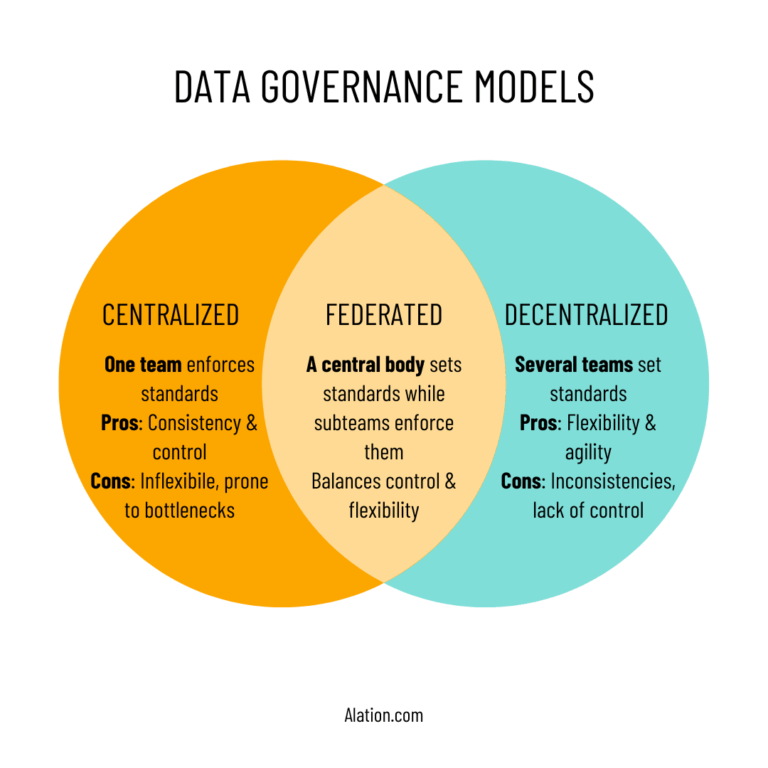
Data governance plays a central role in alignment by
- Establishing one version of truth
- Defining ownership of metrics
- Ensuring data quality
- Preventing metric inflation
Explore quality and governance support at
https://dataguruanalytics.org/data-quality-validation-solutions
Analytics as a Decision Support System
Aligned analytics does not answer everything. It answers what leaders need to decide next.
A well-aligned analytics system
- Surfaces risks early
- Highlights opportunities
- Recommends actions
- Tracks the impact of decisions
Analytics should not end with insight. It should begin with it.
Common Causes of Misalignment
Organizations often break alignment through
- Building analytics in isolation
- Allowing tools to dictate metrics
- Ignoring executive involvement
- Failing to document assumptions
- Treating analytics as IT output
These behaviors produce data but not direction.
Executive Ownership Is Non-Negotiable
Alignment cannot be delegated.
Executives must own analytics direction just as they own strategy.
Leadership responsibilities include
- Defining priorities
- Approving KPIs
- Reviewing insights regularly
- Holding teams accountable for data driven decisions
When executives disengage, analytics drifts. When they lead, analytics delivers.
Real World Example
A manufacturing firm wanted to improve margins. Analytics teams initially focused on production volume and defect rates.
After leadership clarified the goal was profit per unit, analytics shifted to
- Supplier cost variability
- Downtime impact on margins
- Energy efficiency
- Pricing sensitivity
Decisions improved because analytics aligned with strategy, not activity.
Frequently Asked Questions
Can analytics alignment change over time
Yes. Alignment should be reviewed quarterly as business priorities shift.
Does alignment slow analytics projects
No. It prevents wasted work and accelerates impact.
Who owns alignment
Executive leadership with support from analytics and data teams.
Conclusion
Analytics delivers value only when it serves strategy. Aligning business goals with analytics objectives transforms data from passive reporting into active decision support. Organizations that achieve alignment move faster, execute smarter, and compete with clarity. Strategy without analytics is blind. Analytics without strategy is noise.
Call to Action
Align your analytics investments with real business outcomes. Start with expert strategy and infrastructure planning at
https://dataguruanalytics.org/data-infrastructure-consulting and turn analytics into a driver of execution.