
Introduction
Executives are no longer asking for more dashboards. They are asking for fewer decisions made in the dark. Augmented analytics answers this demand by combining artificial intelligence with business data, enabling systems that recommend actions instead of simply reporting numbers.
As markets shift rapidly and digital transformation accelerates, leaders need analytics that scale intelligence, not just information. Augmented analytics removes the gap between insight and action by automating analysis, detecting patterns and delivering proactive recommendations.
The result, when done correctly, is faster decision cycles, clearer strategic direction and reduced dependency on manual interpretation.
What Is Augmented Analytics
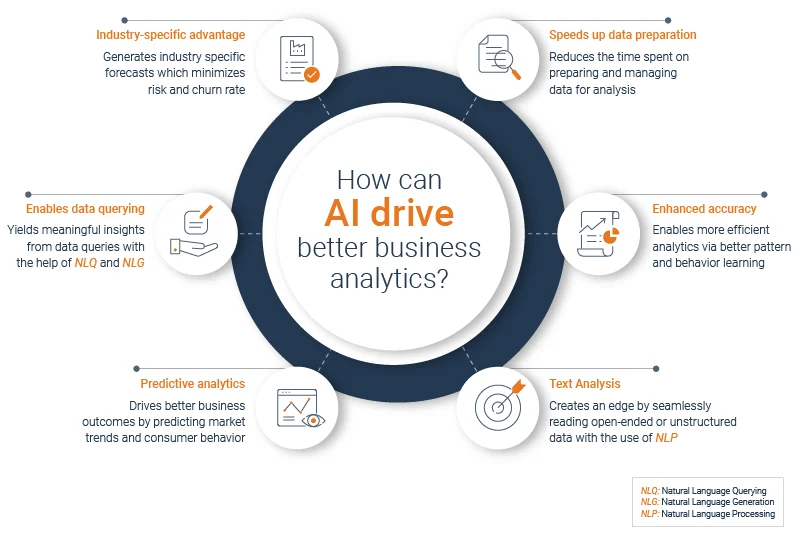
Augmented analytics uses artificial intelligence, machine learning and natural language processing to automate analytics processes.
Instead of humans searching for insights, the system identifies them automatically and presents them in plain language.
Core capabilities include
- Automated analysis of large datasets
- Natural language query
- Machine learning driven predictions
- Automated data preparation
- Automated insight generation
- Self-service analytics
Executives gain clarity faster because technology handles the complexity.
Why Executives Should Pay Attention
Augmented analytics is not a future concept. It is a competitive requirement.
Executives benefit because
- Decision making accelerates
- Forecasting becomes more trustworthy
- Strategy moves from reactive to predictive
- Business units operate with shared intelligence
- Leadership decisions rely on system-level evidence, not isolated reports
The question is not whether augmented analytics will change leadership. It already has.
How Augmented Analytics Improves Leadership Decisions
1. Automated Pattern Detection
AI scans millions of records and highlights changes, anomalies and patterns that humans would not notice.
2. Intelligent Forecasting
Machine learning improves predictions continuously as new data arrives.
3. Faster Response Time
Executives see recommended actions instead of waiting for weekly or monthly reporting cycles.
4. Consistent Decision Framework
Augmented analytics reduces bias by grounding strategy in data rather than opinion.
The Executive Shift
Traditional analytics required analysts to pull data, create dashboards and prepare insights.
Augmented analytics flips that model.
Insights arrive automatically, while analysts focus on validation and direction.
Executives no longer ask, “What happened?”
They ask, “What should we do next based on what the system already knows?”
Augmented Analytics and Data Culture
Augmented analytics works best inside a data-first culture.
Executives must set expectations that insights are operational, not optional.
Culture shifts when
- Data becomes the language of leadership
- Opinions require evidence
- Forecasting replaces speculation
- Insight cycles shorten
- Strategy adjusts continuously
Leaders who adopt augmented analytics early outperform those who wait.
Governance Still Matters
Even with automation, governance is essential.
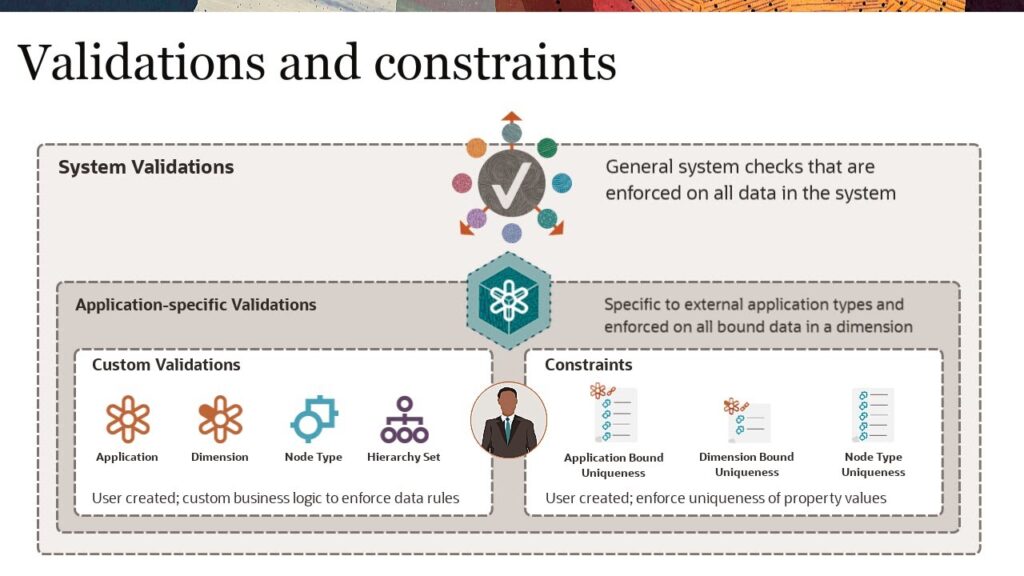
Automated insights must be
- Traceable
- Documented
- Compliant
- Based on credible data
- Audited for bias
Automation without governance increases risk. Explore data quality and validation solutions at
https://dataguruanalytics.org/data-quality-validation-solutions
Executive Examples
Global organizations already leverage augmented analytics to improve
- Revenue forecasting
- Inventory optimization
- Customer lifetime value
- Marketing spend efficiency
- Fraud detection
- Supply chain decision cycles
Executives receive recommendations based on patterns that human analysts would need months to detect.
The Future of Leadership with Augmented Analytics
Executives will rely on augmented analytics to create
- Always-on forecasting
- Real time strategic planning
- Risk prediction dashboards
- Dynamic pricing models
- AI-powered KPI monitoring
Decision cycles will compress from weeks to hours.
Strategy will adjust continuously instead of quarterly.
The future of leadership is not manual analysis.
It is automated insight with human judgment.
Frequently Asked Questions
Does augmented analytics replace analysts
No. It elevates analysts by removing manual work and focusing their attention on strategic interpretation.
Is augmented analytics only for large enterprises
No. Mid-sized companies gain immediate value because automation replaces expensive reporting cycles.
Does augmented analytics require AI expertise
No. Modern platforms handle AI internally. Business teams use insights without engineering complexity.
Conclusion
Augmented analytics moves leaders from observation to prediction. It enables executives to act on insights before competitors recognize the pattern. Organizations that adopt augmented analytics build faster strategies, more resilient operations and stronger competitive advantage.
Call to Action
Transform your decision-making process with enterprise analytics systems designed for intelligence and automation. Begin at
https://dataguruanalytics.org/data-infrastructure-consulting and prepare your leadership for data-driven strategy.