

Introduction
Executives want solutions that last. In the world of data, most companies operate in cycles of crisis, tool adoption and short term migrations. Real sustainability is rare. A sustainable data ecosystem is not a dashboard, a pipeline or a warehouse. It is an environment designed to generate value continuously. When done correctly, it becomes the backbone of enterprise innovation, resilience and competitive intelligence.
Data strategy is now business strategy. Companies that treat data as a tactical IT problem fall behind. Those who view it as an ecosystem built for endurance outperform competitors in forecasting, customer experience, pricing and product development. Sustainable data management is the model used by enterprises that want to compete at scale, not react to disruption.
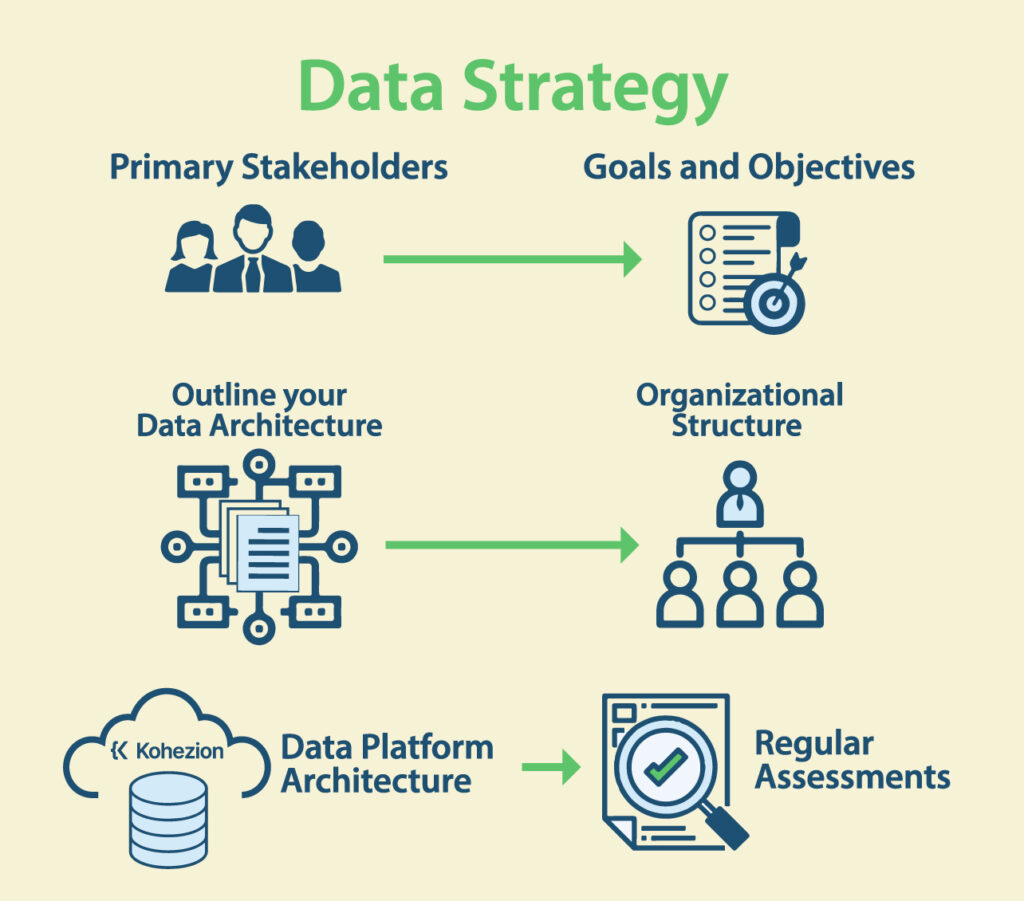
What Makes a Data Ecosystem Sustainable
A sustainable data ecosystem is not built around convenience. It is built around continuity, scalability and clarity. It must withstand market shocks, personnel changes and technology turnover.
A sustainable ecosystem has four defining qualities
1. Durability
Systems do not collapse when a key engineer leaves or a vendor changes.
2. Scalability
As the business grows, the infrastructure grows with it instead of slowing it down.
3. Interoperability
Every department works from a unified view instead of fragmented data silos.
4. Long term ROI
Cost reduces over time because automation increases and governance eliminates rework.
Executives should think in systems, not tools. Tools expire. Ecosystems evolve.
Why Most Enterprises Fail at Sustainability
Data initiatives often fail for the same reasons
Tool chasing, where every pain point triggers a new software purchase.
Shadow data, where departments create their own spreadsheets and metrics.
Project mindset, where analytics is treated as a one time task.
Underestimated governance, where no one owns the definitions or the truth.
These decisions create temporary relief but long term decay. Leaders should invest in environments where data behaves like an asset, not an emergency.
The Infrastructure Foundation
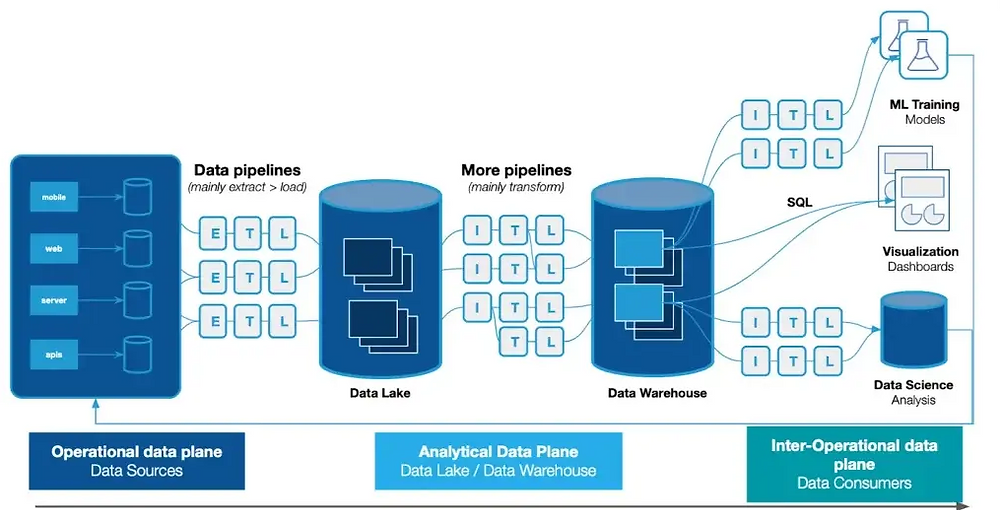
Architecture determines sustainability. Poor foundations cannot be fixed with dashboards or data science hires. Modern enterprises build ecosystems on flexible, cloud forward infrastructure.
Cloud and Hybrid Platforms
Cloud-first does not mean cloud-only. Hybrid models balance regulatory constraints, performance and scalability. They lower operational friction and enable global access to unified data.
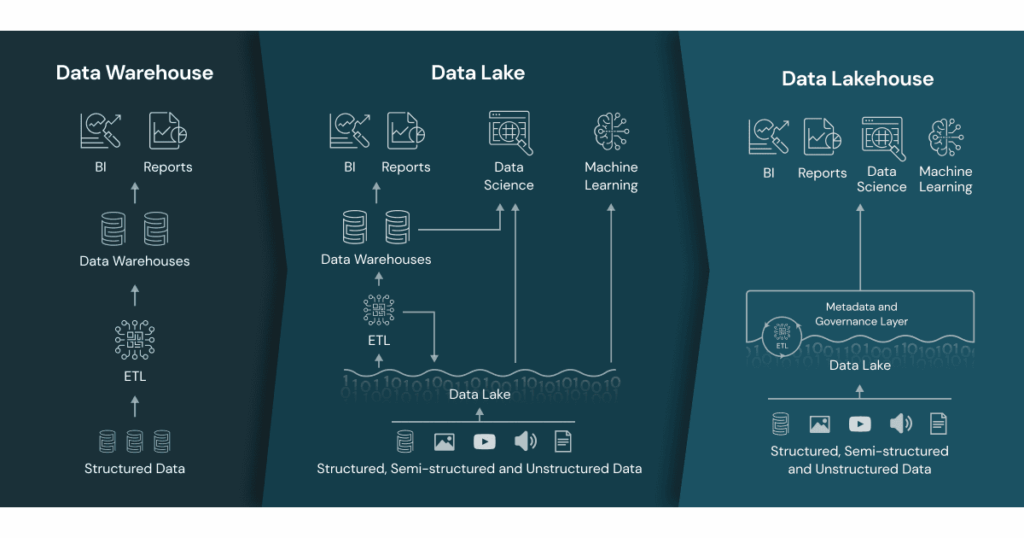
Lakehouse Models
A lakehouse combines data lake flexibility with warehouse reliability. It supports BI, machine learning and real time analytics without duplicated storage.
Lakehouse environments reduce fragmentation and simplify the analytics lifecycle.
Executives can explore modernization planning and design support at
https://dataguruanalytics.org/data-infrastructure-consulting
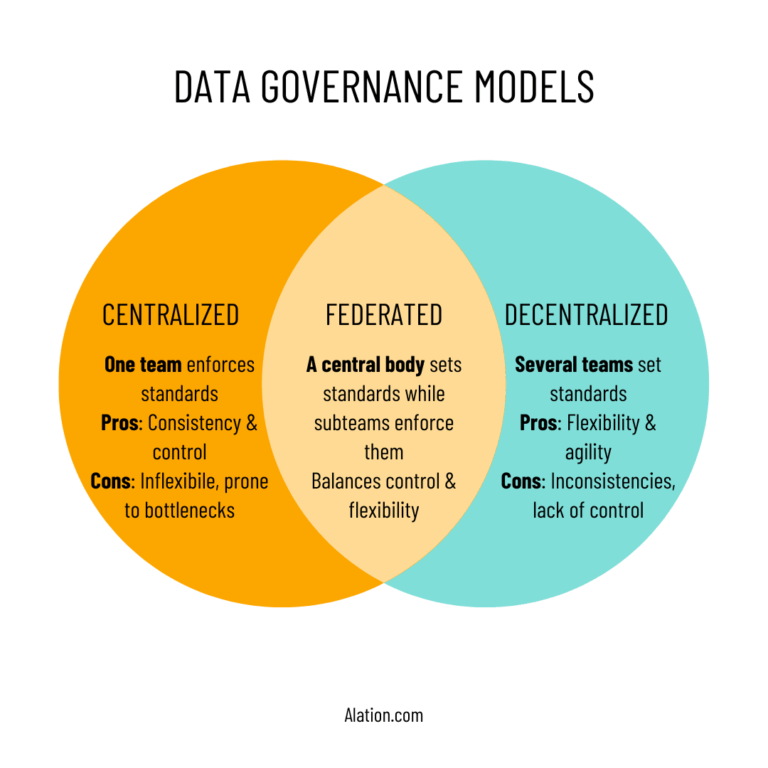
Governance Is the True Engine of Sustainability
Technology does not make ecosystems sustainable. Governance does.
Governance defines how data should be treated, who can use it and what qualifies as truth.
A sustainable data ecosystem establishes
- Data ownership by role, not personality
- Quality standards that are non negotiable
- Access rules enforced proactively
- Stewardship across business units
- Auditability to meet regulatory environments
Without governance, analytics becomes political. One department has one version of revenue, another has a different one, and the executive team is caught between competing narratives.
Executives should treat governance as operating policy, not compliance paperwork. A strong governance model prevents risk and accelerates innovation. Explore quality and validation solutions at
https://dataguruanalytics.org/data-quality-validation-solutions
Automation Guarantees Longevity
No sustainable ecosystem relies on manual effort. Manual effort disappears with employee turnover. Automation persists.
Automated ingestion
Data arrives from applications, sensors, platforms and systems without human intervention.
Automated validation
Rules and AI-based checks detect anomalies before insights are consumed.
Automated lineage
Metadata shows where metrics come from, how they were created and who touched them.
Automated monitoring
Executives and engineers see system health in real time instead of waiting for reports.
The more automation a data ecosystem has, the less fragile it becomes.
Human Capability Completes the System
Technology scales. Culture sustains.
A sustainable data ecosystem is useless if teams do not use data to make decisions.
C-suite leadership should set non-negotiable expectations
- Strategy must be evidence based
- Forecasts must reflect actual patterns
- Personal opinions must be validated
- Metrics must be agreed upon before action
Analytics is not a department. It is a business language.
Data literacy for executives, managers and product teams prevents misinterpretation and builds trust.
Avoid the Trap of Short Term Fixes
Enterprises often choose speed over stability. Quick fixes look attractive when pressure mounts, but they become expensive later.
Examples
- Building a dashboard instead of fixing the pipeline
- Hiring contractors for manual cleaning instead of governance
- Purchasing a large analytics tool without cultural readiness
- Migrating to cloud without strategy or ownership
Temporary wins destroy credibility. Sustainable ecosystems eliminate problems permanently.
Real Outcomes from Sustainable Ecosystems
Research from Deloitte, McKinsey and Gartner shows that enterprises with mature data ecosystems outperform their peers because they
- Recover faster from market disruptions
- Detect customer trends earlier
- Reduce operational cost at scale
- Launch digital products more successfully
- Train AI models with consistent data
These organizations do not guess. They measure. They do not respond late. They anticipate.
Frequently Asked Questions
Is sustainability just about reducing cloud spend
No. Sustainability is about architecture, governance, automation and usage. Cloud optimization is a benefit, not the goal.
Can small and mid size companies build sustainable ecosystems
Yes. They benefit faster because they have fewer legacy constraints and can scale intentionally.
Does sustainability slow innovation
The opposite. Sustainable ecosystems accelerate innovation because teams do not waste time firefighting.
Conclusion
Sustainable data ecosystems give companies strength. They support growth, protect decision quality and reduce risk. They move analytics away from tool chasing and toward long term value creation. The organizations that embrace sustainability will dominate their markets because they learn faster, act faster and execute with clarity.
Call to Action
Design a data ecosystem built to last. Begin with expert consulting at
https://dataguruanalytics.org/data-infrastructure-consulting and transform your data into a durable competitive advantage.