

Introduction
Business strategy has shifted. Decisions are no longer shaped only by instinct, leadership experience, or quarterly financial reports. Today, winning enterprises use data as the engine of every decision. That is why data strategy planning is now business strategy. Organizations that treat data as a byproduct fall behind, while those that architect it intentionally outperform, scale faster, and innovate ahead of competitors.
Executives face a new reality. Every market shift, every customer interaction, and every operational weakness is reflected in the data. Companies that extract insight from this information make smarter moves. Those that cannot remain slow, reactive, and disrupted. This is why global leaders now invest directly in enterprise analytics strategy, not as a technical add-on, but as a core pillar of growth.
Why Data Strategy Has Become Business Strategy
Data is no longer just an asset. It is infrastructure, risk management, customer insight, and predictive forecasting all in one system. Companies that adopt a data-first mindset gain advantages that traditional planning cannot deliver.
Data strategy planning enables enterprises to
- Understand real customer behavior instead of assumptions
- Detect opportunities faster than competitors
- Forecast risks with precision
- Improve product relevance and pricing accuracy
- Eliminate inefficiency across business operations
When data becomes the operating system of the enterprise, leadership gains clarity. Strategy shifts from reactive to proactive, and every decision is grounded in truth, not guesswork.
Leadership Is Now Measured by Data Competence
The modern CEO is no longer defined by charisma or cost cutting. The leaders shaping global markets understand how to use data to build momentum.
They know
- What trends will impact their industry next quarter
- Which customers generate the most value
- Where internal inefficiencies create hidden costs
- When to invest, scale, or pivot
Executives who ignore analytics operate blind. Those who own a data analytics roadmap guide their organizations with confidence.
Data Moves the Organization From Reporting to Intelligence
Traditional businesses spend energy answering old questions.
How did we perform last month
Why did revenue drop
What caused delays
These questions are backward looking and slow.
Modern enterprises ask
What will customers do tomorrow
Which product will they choose
How can we improve conversion in real time
Where should we deploy resources to maximize return
This is the difference between reporting and intelligence. A mature data strategy does not just monitor. It predicts, influences, and transforms.
Five Pillars of a Strong Data Strategy
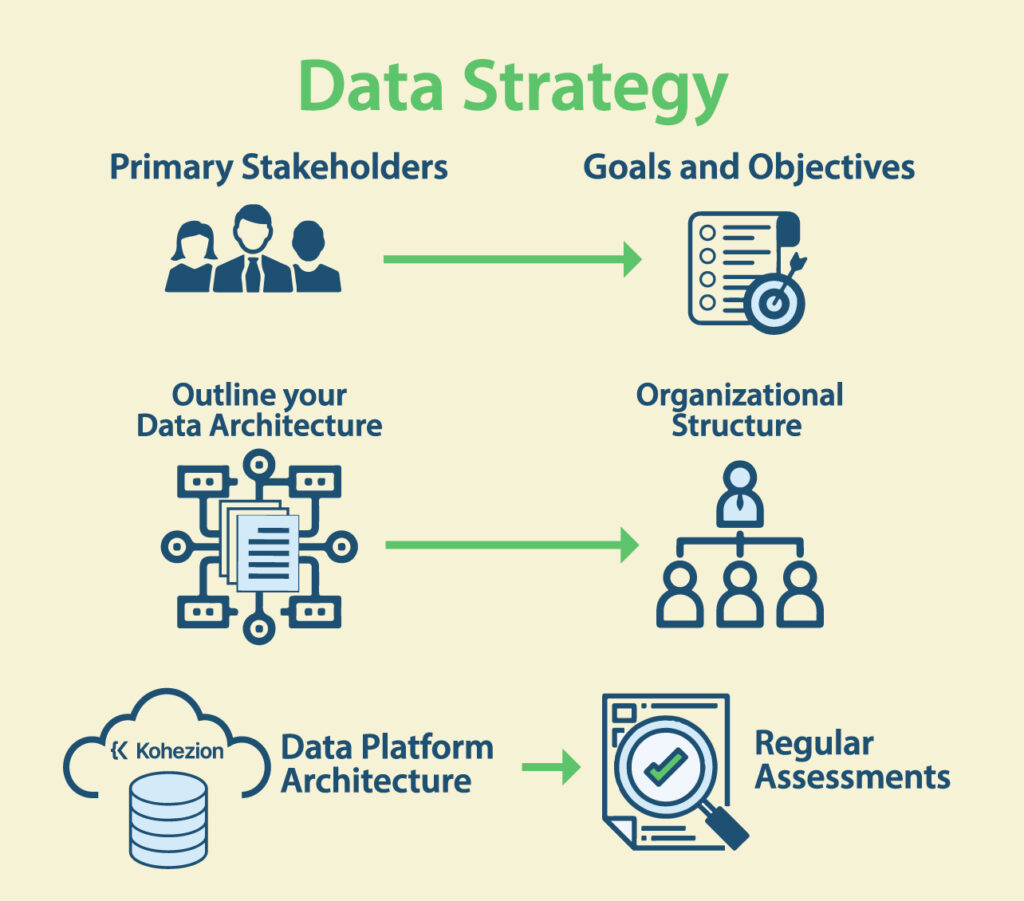
A winning data strategy is built on structure, not luck. It must connect technology, talent, and business value.
1. Data Governance
Clear ownership, access rules, and quality standards keep the enterprise aligned. Governance ensures one source of truth and eliminates political battles over whose data is correct.
2. Infrastructure Modernization
Legacy systems cannot support real time analytics or enterprise growth. Companies scale by adopting modern cloud and hybrid environments that reduce friction and increase availability. Explore modernization solutions at https://dataguruanalytics.org/data-infrastructure-consulting
3. Analytics Capability
Dashboards alone are not analytics. Enterprises need data modelers, domain experts, and leadership teams who interpret insights and translate them into action.
4. Data Literacy
Organizations fail when information is available but not understood. Teams at every level must learn how to use analytics to solve problems and pursue goals.
5. Automation
Automation turns data from passive resource into continuous value. When ingestion, cleaning, and reporting flow automatically, leadership sees the truth in real time.
Why Strategy Without Data Fails
Executives often believe they know the market because they know the industry. This worked when change was slow. That world no longer exists. Consumer preferences are influenced by social platforms, instant feedback loops, and global competition.
Without enterprise analytics strategy, businesses experience
- Misaligned investments
- Irrelevant product development
- Poor pricing and distribution
- Marketing waste and low ROI
- Leadership paralysis based on outdated assumptions
Data serves as the compass. It does not replace vision, but it prevents leaders from walking in circles.
Turning Data Into Competitive Advantage
Enterprises that win do three things exceptionally well.
They listen to the data
Customer signals appear in browsing behavior, purchase patterns, churn trends, and product usage. When treated as actionable information, these signals inform design, service, and expansion decisions.
They act before competitors
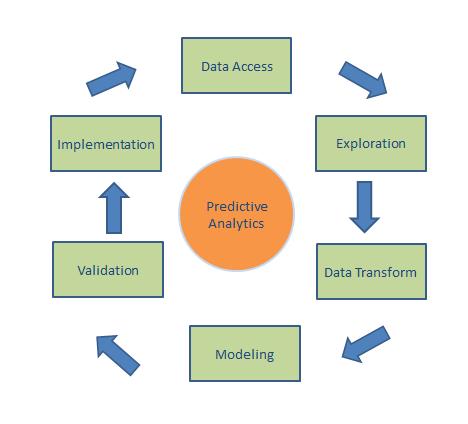
Predictive analytics and AI uncover opportunities that others notice too late. Anticipation is more profitable than reaction.
They scale insights across the organization
Not only the analytics team uses data. Sales, marketing, product, finance, and operations all make decisions based on shared truth.
How to Begin Your Data Strategy Planning
1. Audit your existing environment
Identify limitations in storage, access, quality, and analytics workflow.
2. Define business outcomes, not IT tasks
Examples include faster decision cycles, reduced cost, or better personalization.
3. Modernize infrastructure
Move away from fragile legacy systems. High performance data environments unlock scale.
Learn more at https://dataguruanalytics.org/data-infrastructure-consulting
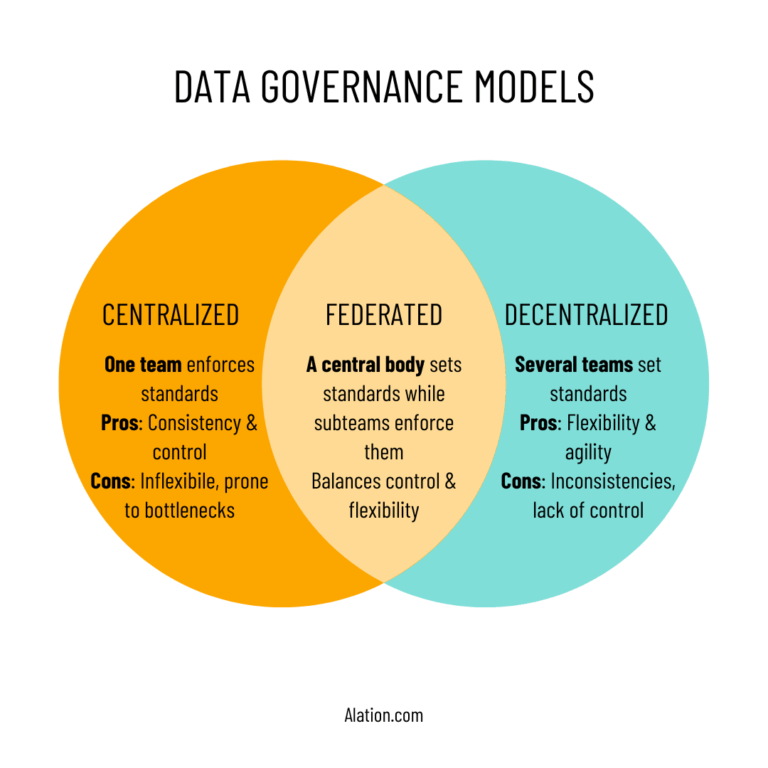
4. Create a role-based governance model
Executives own direction, domain teams own interpretation, and engineers own reliability.
5. Invest in literacy and analytics talent
Technology alone cannot execute strategy. Humans create impact.
What World-Class Companies Already Know
Industry research from McKinsey, Gartner, and Accenture continually shows the same result.
Organizations that employ strong data strategy planning outperform competitors in growth, innovation, and resilience. They recover faster from market shocks because their leaders can see pressure points early and adjust accordingly. They understand customers with clarity and reduce operational waste by targeting the real cause of inefficiency, not assumptions.
Data-first enterprises do not react to the market. They influence it.
Frequently Asked Questions
Is data strategy only for large organizations
No. Mid size and growth stage companies benefit most because they move faster and adapt quickly.
Can a company have strong analytics without a data strategy
It is possible, but results will be inconsistent. Strategy aligns technology, people, and objectives.
How long does it take to see impact
Once governance and reporting are aligned, organizations typically see improvement in decision speed within three to six months.
Conclusion
In modern markets, data strategy is business strategy. Organizations that treat analytics as an operational tool fall behind. Those that design data as an enterprise capability lead industries, retain loyalty, and innovate before competitors. The future belongs to companies that invest in clarity.
Call to Action
Develop a data strategy that positions your business for long term growth. Explore consulting solutions at https://dataguruanalytics.org/data-infrastructure-consulting and transform analytics into competitive advantage.