
Introduction
Machine learning has become a core capability for modern enterprises, powering forecasting, personalization, risk assessment, and automation. Yet many organizations struggle to achieve consistent and reliable results from their AI initiatives. Models underperform, predictions drift, and confidence erodes over time. In most cases, the issue is not the algorithm. It is the data.
Data quality for AI models is the single most influential factor in determining model accuracy and long term performance. Even the most advanced machine learning techniques fail when trained on incomplete, inconsistent, or biased data. Enterprises that prioritize data quality build AI systems that are not only more accurate, but also more trustworthy, explainable, and scalable.
Why Data Quality Matters More Than Algorithms
It is tempting to believe that better models automatically lead to better results. In practice, machine learning systems learn patterns that already exist in the data. If the data is flawed, the model faithfully reproduces those flaws at scale.
High quality data enables models to generalize correctly, adapt to change, and deliver insights aligned with real world behavior. Poor data introduces noise, bias, and instability that no amount of tuning can fully correct. For enterprise leaders, understanding this relationship is critical to setting realistic expectations for AI performance.
What Defines High Quality Data for AI Models
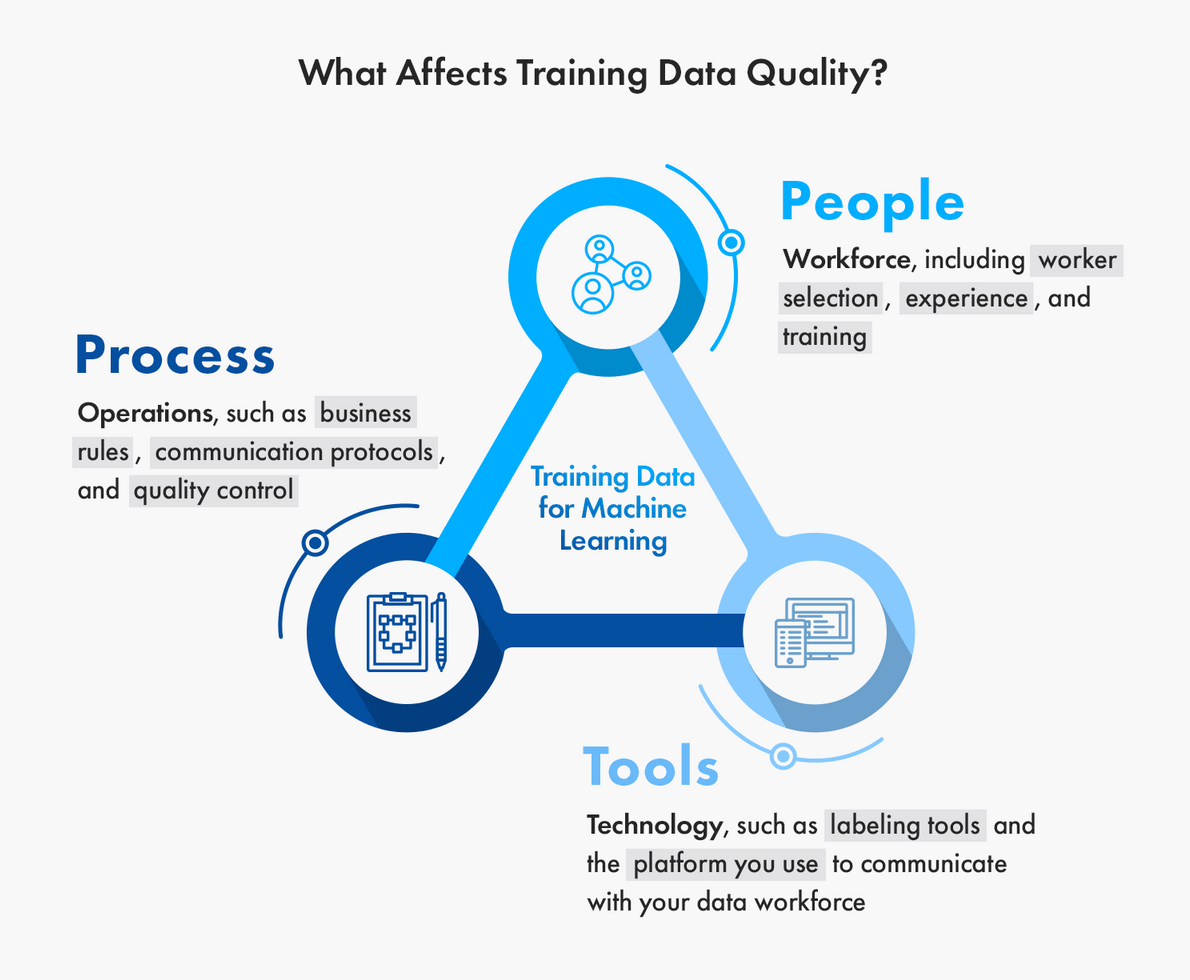
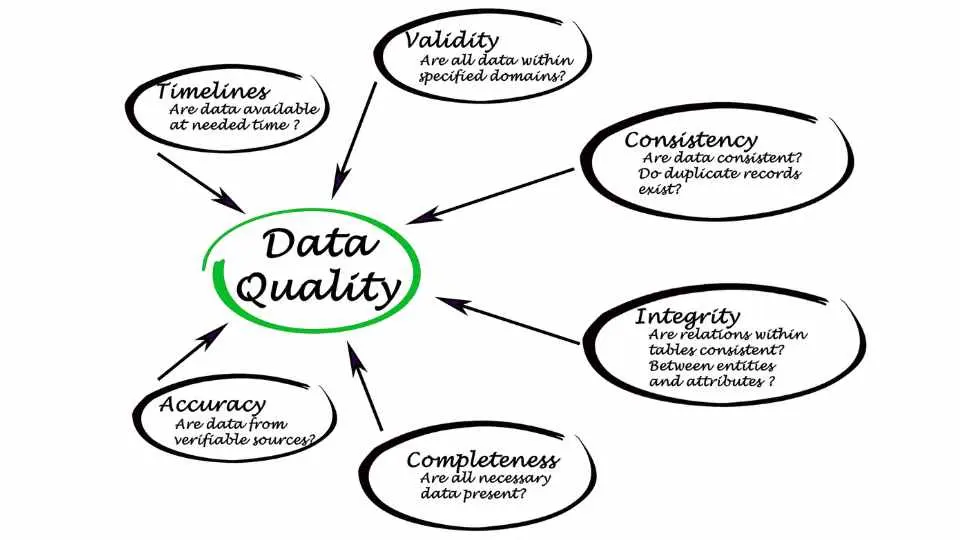
Data quality is not a single attribute. It is a combination of characteristics that determine whether data is fit for machine learning purposes.
Key dimensions of data quality for AI models include:
- Accuracy, values correctly reflect real world states
- Completeness, critical fields are populated consistently
- Consistency, definitions and formats align across sources
- Timeliness, data reflects current conditions
- Relevance, features are meaningful for the learning task
- Representativeness, data captures the full range of scenarios
When these dimensions are weak, models learn distorted patterns that reduce accuracy and reliability.
How Poor Data Quality Impacts Machine Learning Accuracy
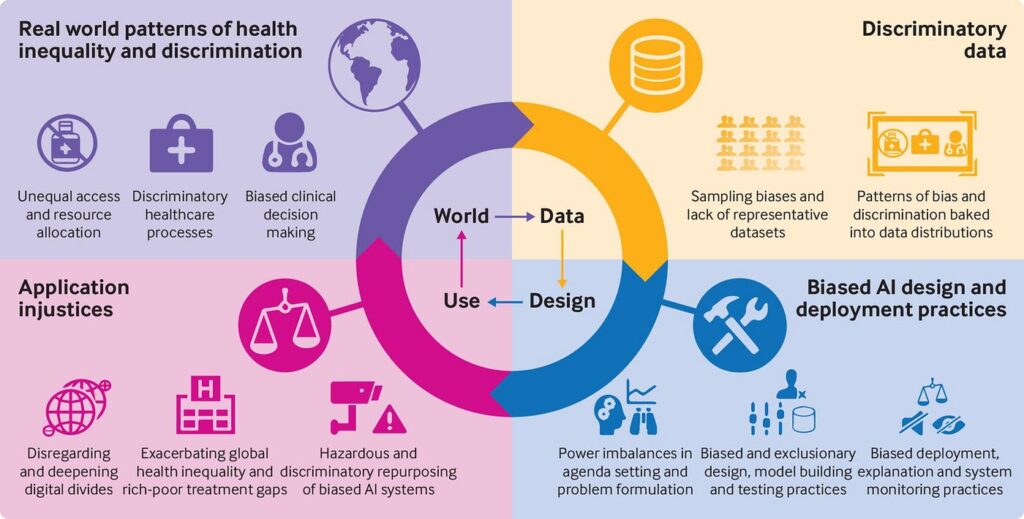
Poor data quality affects machine learning systems in several interconnected ways.
Reduced Predictive Accuracy
Incomplete or incorrect data leads to models that misclassify outcomes or produce unreliable predictions. This is especially damaging in high stakes use cases such as fraud detection, credit risk, or demand forecasting.
Bias and Unfair Outcomes
If training data reflects historical bias or incomplete representation, models inherit those biases. This can lead to unfair or unethical outcomes and increase regulatory risk.
Model Instability and Drift
Inconsistent data pipelines or delayed updates cause models to drift away from reality. Performance degrades gradually, often without immediate visibility.
Increased Operational Cost
Teams spend significant time retraining, debugging, and compensating for poor data quality. This reduces the return on AI investments and slows innovation.
Data Quality Challenges Unique to AI Systems
Machine learning introduces challenges beyond traditional analytics. Models are sensitive to subtle changes in data distributions and feature relationships. Issues that may be tolerable in reporting environments can be catastrophic for AI accuracy.
Common challenges include:
- Training data collected under outdated conditions
- Mismatched features between training and production
- Labeling errors in supervised learning
- Hidden data leakage that inflates initial performance
- Inconsistent preprocessing across pipelines
Addressing these challenges requires a proactive and automated approach to data quality management.
Building Data Quality into the AI Lifecycle
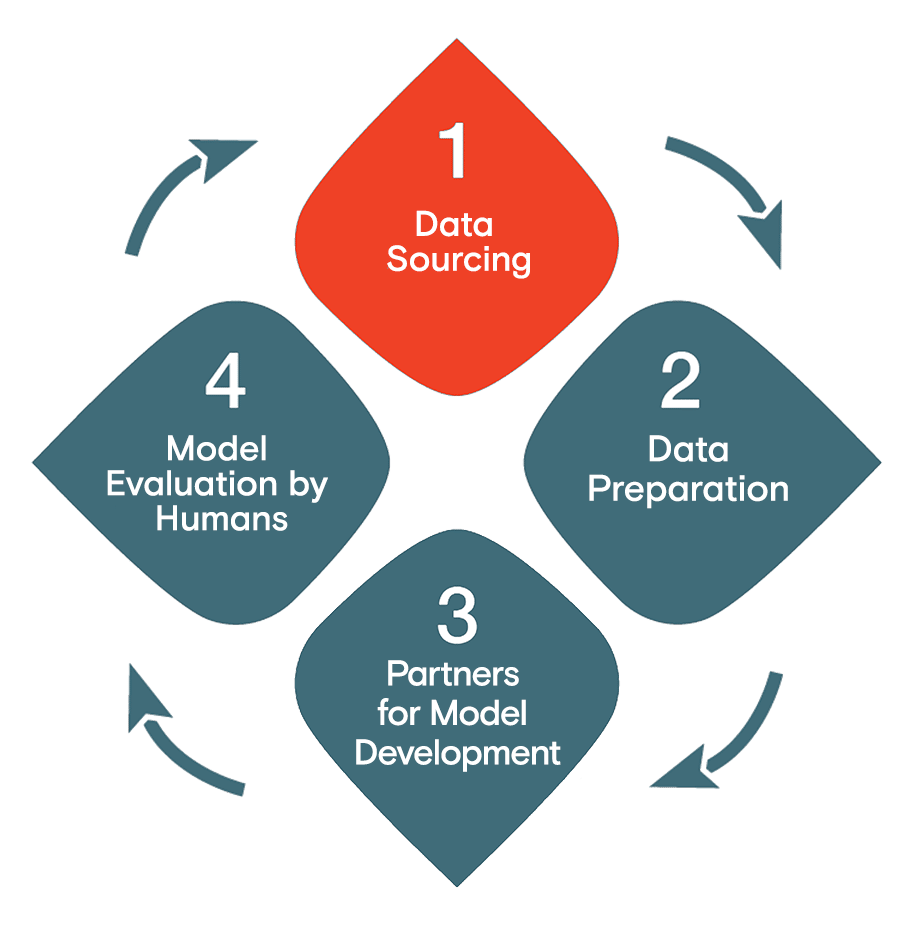
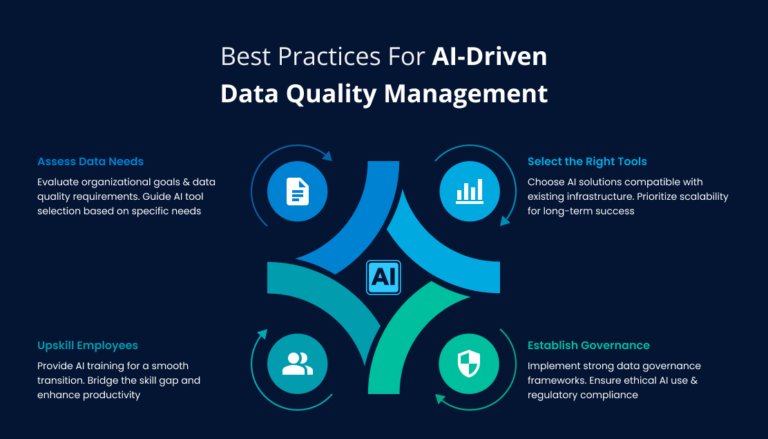
Data quality must be embedded across the entire AI lifecycle, not treated as a one time cleanup task.
Data Ingestion and Preparation
Quality checks should begin at ingestion. Validation rules, anomaly detection, and schema enforcement help prevent flawed data from entering training pipelines.
Feature Engineering and Selection
Features should be reviewed for relevance, stability, and potential bias. High quality features improve model interpretability and accuracy.
Model Training and Evaluation
Training datasets must be representative and well balanced. Evaluation should include tests for bias, robustness, and sensitivity to data variation.
Deployment and Monitoring
Once deployed, models must be monitored continuously. Changes in data patterns should trigger alerts and retraining workflows.
Enterprises often strengthen these practices through dedicated data quality and validation solutions such as those available at https://dataguruanalytics.org/data-quality-validation-solutions, ensuring consistency across analytics and AI systems.
The Role of Governance in AI Data Quality
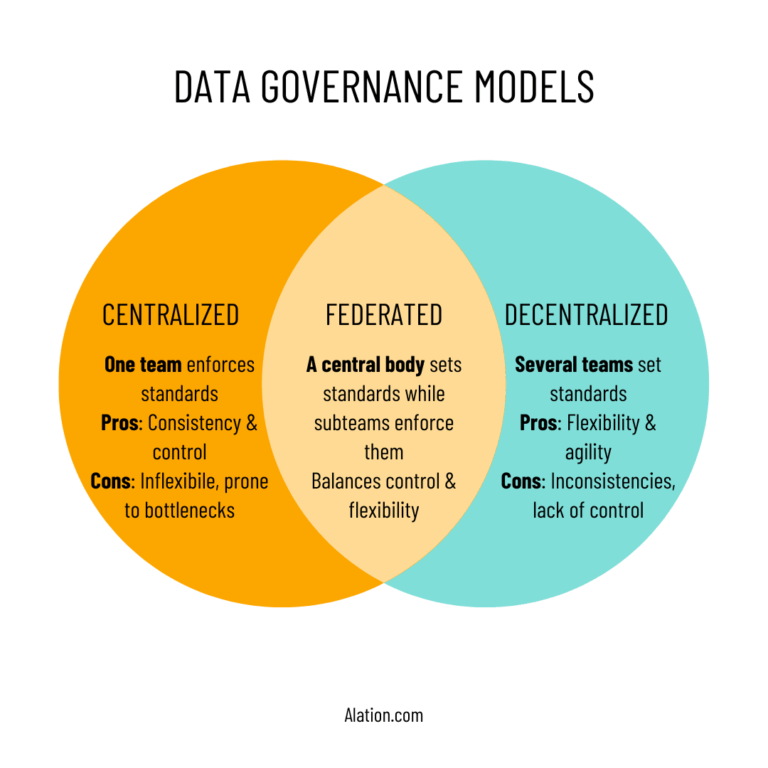
Strong data governance provides the structure needed to maintain quality at scale. Governance defines ownership, standards, and accountability for data used in machine learning.
Key governance elements include:
- Clear ownership of training and production datasets
- Documented data definitions and feature logic
- Access controls and audit trails
- Approval processes for data changes
- Alignment with ethical and regulatory requirements
Organizations building centralized governance frameworks often integrate AI initiatives through advisory support such as https://dataguruanalytics.org/services/research-consultancy/ to ensure long term sustainability and trust.
Real World Impact of High Quality Data on AI Accuracy
Enterprises that invest in data quality see measurable improvements in AI performance and business outcomes.
Benefits include:
- Higher model accuracy and stability over time
- Faster deployment of AI use cases
- Reduced bias and compliance risk
- Increased confidence among executives and stakeholders
- Better alignment between AI outputs and business reality
In contrast, organizations that overlook data quality often struggle to scale AI beyond pilot projects.
Common Mistakes Enterprises Make
Despite growing awareness, many organizations repeat the same mistakes when building AI systems.
Common pitfalls include:
- Prioritizing model complexity over data readiness
- Treating data quality as an afterthought
- Failing to monitor data drift in production
- Underestimating the effort required for labeling and validation
- Separating AI initiatives from governance programs
Avoiding these mistakes requires a cultural shift toward data as a strategic asset rather than a technical input.
Measuring Data Quality Impact on Machine Learning
Enterprises should track metrics that link data quality directly to model performance.
Key indicators include:
- Model accuracy and error rates over time
- Frequency of retraining triggered by data changes
- Reduction in data related incidents
- Stability of predictions across environments
- Business outcomes influenced by AI decisions
These metrics help leaders understand whether investments in data quality are improving AI effectiveness.
Frequently Asked Questions
Can machine learning models compensate for poor data quality
No. Models amplify patterns in the data they receive. Poor data quality limits accuracy regardless of algorithm sophistication.
How often should data quality be reviewed for AI systems
Data quality should be monitored continuously, with formal reviews conducted regularly or after major data or business changes.
Is data quality more important for some AI use cases than others
Yes. High risk and high impact use cases require especially strong data quality controls and governance.
Conclusion
Machine learning accuracy is built on data quality. Enterprises that treat data as a strategic foundation rather than a technical detail unlock more reliable, fair, and scalable AI systems. By embedding data quality across the AI lifecycle and aligning it with governance, organizations protect their investments and accelerate innovation. In the age of enterprise AI, quality data is not optional. It is decisive.
Call to Action:
Build AI systems your organization can trust. Explore expert guidance on improving data quality for AI models at https://dataguruanalytics.org and strengthen the foundation of your enterprise machine learning strategy.