
Introduction
Enterprises generate more data than ever before, yet many leaders still struggle to turn analytics into action. Dashboards are filled with charts, reports are packed with metrics, and presentations overflow with numbers, but decisions stall. The problem is not a lack of data. It is a lack of meaning.
Data storytelling bridges the gap between analysis and action. By combining data, context, and narrative, organizations can communicate insights in a way that executives understand, remember, and trust. In a global business environment where speed and clarity matter, data storytelling has become a critical content strategy capability rather than a soft skill.
What Is Data Storytelling
Data storytelling is the practice of translating data insights into clear, compelling narratives that explain what is happening, why it matters, and what should happen next. It combines analytics, visualization, and business context into a structured message.
Unlike traditional reporting, data storytelling does not aim to show everything. It focuses attention on what is most relevant to the audience. A strong data storytelling approach aligns insights with business objectives, risk considerations, and strategic decisions.
At its core, data storytelling answers three questions leaders care about:
- What does the data tell us
- Why is this important now
- What decision or action should follow
Why Data Storytelling Matters in Modern Enterprises
As organizations scale, decision making becomes more distributed and complex. Leaders must interpret insights across functions, regions, and time zones. Raw data alone rarely provides the clarity required at this level.
Key reasons enterprises are prioritizing data storytelling include:
- Information overload from dashboards and reports
- Increased reliance on data for strategic decisions
- Need for alignment across executive teams
- Demand for faster decision cycles
- Higher accountability for data driven outcomes
Without effective storytelling, valuable insights remain trapped in analytics platforms and fail to influence strategy.
The Elements of Effective Data Storytelling
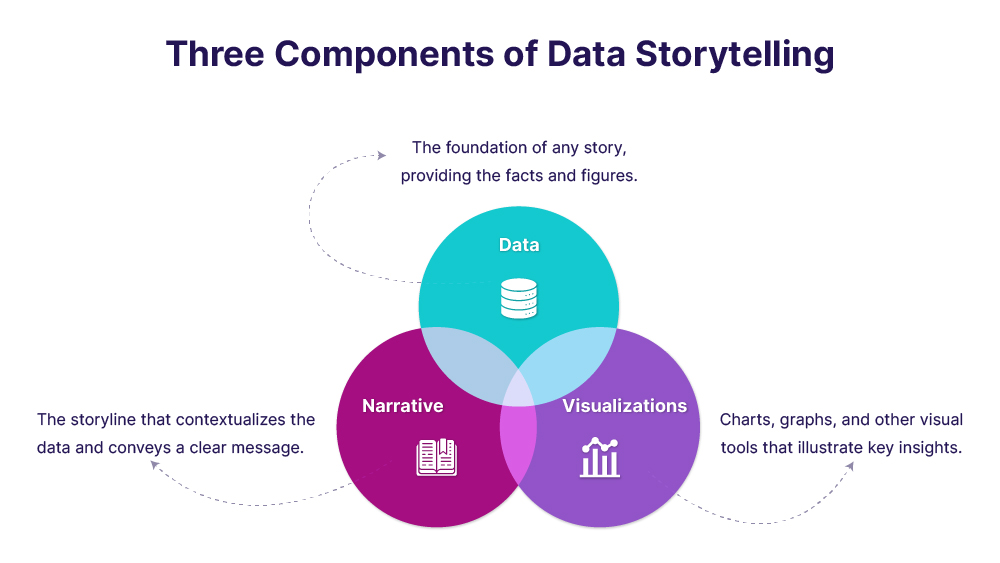
Successful data storytelling rests on three interconnected elements that must work together.
Data
The foundation of any story is credible data. Accuracy, consistency, and relevance are essential. If stakeholders question the data, the narrative collapses. Strong data quality and validation practices ensure insights are trusted and defensible.
Organizations often strengthen this foundation through dedicated data quality and validation solutions available at https://dataguruanalytics.org/data-quality-validation-solutions.
Narrative
The narrative provides structure and meaning. It explains relationships, highlights patterns, and guides the audience toward conclusions. A strong narrative focuses on cause and effect rather than isolated metrics.
Effective narratives are purposeful. They are designed around decisions, not curiosity.
Visualization
Visuals make complex information easier to understand. Charts, graphs, and dashboards should reinforce the narrative rather than distract from it. The best visualizations highlight contrasts, trends, and anomalies clearly.
Common Mistakes in Data Communication
Many organizations struggle with data storytelling because they treat reporting as an end rather than a means. Common mistakes include:
- Presenting too many metrics at once
- Using generic dashboards for all audiences
- Focusing on visuals without context
- Ignoring the business question behind the analysis
- Assuming data speaks for itself
These issues reduce engagement and lead decision makers to disengage from analytics altogether.
Building a Data Storytelling Strategy
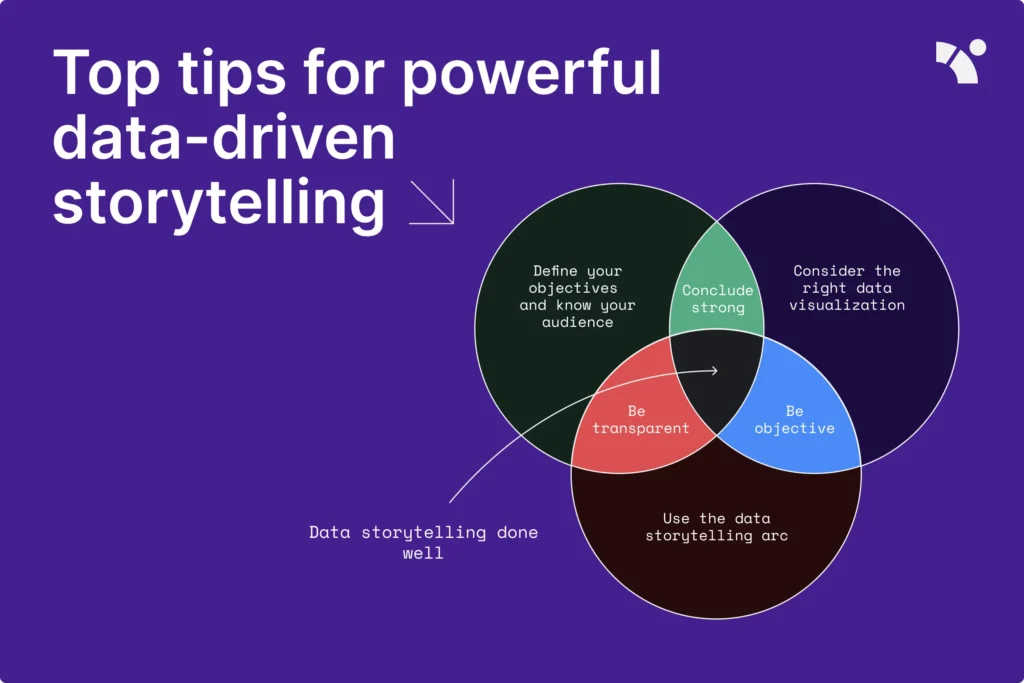
Data storytelling should be approached as a strategic capability, not an ad hoc activity.
Start with the Decision
Every story should begin with a clear understanding of the decision it supports. Whether the goal is to allocate resources, manage risk, or adjust strategy, the narrative should be shaped around that outcome.
Know Your Audience
Executives, managers, and operational teams require different levels of detail. Tailoring stories to the audience improves relevance and impact. Executive narratives should emphasize implications and tradeoffs rather than technical details.
Structure the Narrative
Effective stories follow a logical flow. They establish context, present insights, explain drivers, and conclude with implications. This structure helps audiences follow the reasoning and retain key messages.
Align Stories with Business Goals
Stories gain power when they connect directly to strategic objectives. Linking insights to growth, efficiency, risk reduction, or customer experience ensures relevance at the leadership level.
Organizations often formalize this alignment through analytics advisory and content strategy support such as that provided via https://dataguruanalytics.org/services/research-consultancy/.
Data Storytelling in Executive Decision Making
At the executive level, time is limited and stakes are high. Data storytelling helps leaders quickly understand tradeoffs and consequences.
Benefits for leadership teams include:
- Faster comprehension of complex issues
- Improved alignment across functions
- Greater confidence in analytics outputs
- More decisive action based on shared understanding
When data is presented as a coherent narrative, it becomes a strategic asset rather than a technical artifact.
The Role of Data Storytelling in Organizational Culture
Data storytelling also plays a critical role in building a data driven culture. When insights are communicated clearly, teams are more likely to trust and use data in daily decisions.
Over time, storytelling fosters:
- Shared understanding of metrics and goals
- Higher adoption of analytics tools
- Improved collaboration between technical and business teams
- Stronger accountability for outcomes
This cultural impact extends beyond dashboards into how organizations think and act.
Measuring the Impact of Data Storytelling
Enterprises should assess whether data storytelling is improving decision making and engagement.
Key indicators include:
- Increased use of analytics in leadership discussions
- Faster decision cycles
- Reduced follow up questions on reports
- Greater alignment across teams
- Clear linkage between insights and actions taken
These signals indicate whether stories are driving value rather than simply informing.
Frequently Asked Questions
Is data storytelling only about visualization
No. Visualization supports storytelling, but narrative and context are equally important.
Can data storytelling work with complex or technical data
Yes. Storytelling simplifies complexity by focusing on implications rather than details.
Who should be responsible for data storytelling in an organization
It is a shared responsibility between analytics teams, business leaders, and content strategists.
Conclusion
Data alone does not drive decisions. Meaning does. Storytelling with data transforms numbers into narratives that leaders can understand, trust, and act upon. Enterprises that invest in data storytelling elevate analytics from reporting to strategy, enabling clearer communication and stronger decision making across the organization.
Call to Action:
Turn your analytics into narratives that drive action. Explore expert guidance on data storytelling and analytics strategy at https://dataguruanalytics.org and strengthen how your organization communicates insight at scale.