
Introduction
Data infrastructure is no longer a passive backend system. It is now the engine that dictates how fast companies innovate react and compete. Enterprises that modernize their data environments are outperforming traditional organizations across speed accuracy and operational efficiency.
Today’s leading companies are no longer asking whether to modernize but how quickly they can execute. The shift to cloud native ecosystems real time data pipelines and intelligent automation is transforming business performance across every industry.
Below are the top data infrastructure trends shaping the future of enterprise modernization.
1. Hybrid and Multi Cloud Data Architecture
Global enterprises are moving away from single vendor environments. Modern data platforms combine on premise systems with multiple cloud providers to increase flexibility and performance.
Hybrid and multi cloud models allow organizations to
- Reduce vendor lock in
- Improve disaster recovery
- Optimize cost by distributing workloads
2. Real Time Data Processing
Batch reporting is becoming obsolete. Modern businesses require live insights for decision making. Streaming data pipelines enable faster fraud detection better customer personalization and instant operational visibility.
Tools such as Kafka and cloud streaming services are making real time ingestion standard for competitive enterprises.
3. Data Lakehouse Adoption
The lakehouse combines the flexibility of data lakes with the structure of data warehouses. This unified architecture allows companies to store raw and structured data in one environment while supporting BI and machine learning workloads.
Enterprises adopting lakehouse systems experience
- Lower storage cost
- Easier data governance
- Faster analytics performance
4. AI Driven Data Infrastructure
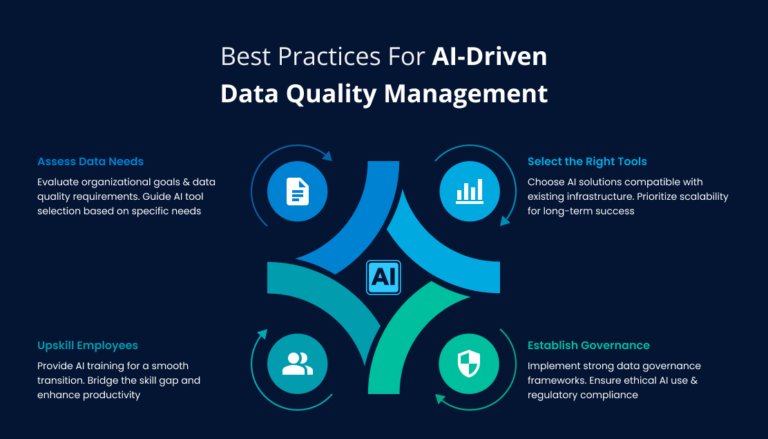
Automation is now built into every layer of modern data systems. AI powered optimization tools adjust compute power detect anomalies improve pipeline reliability and reduce manual engineering work.
This creates scalable environments suitable for advanced analytics and predictive modeling.
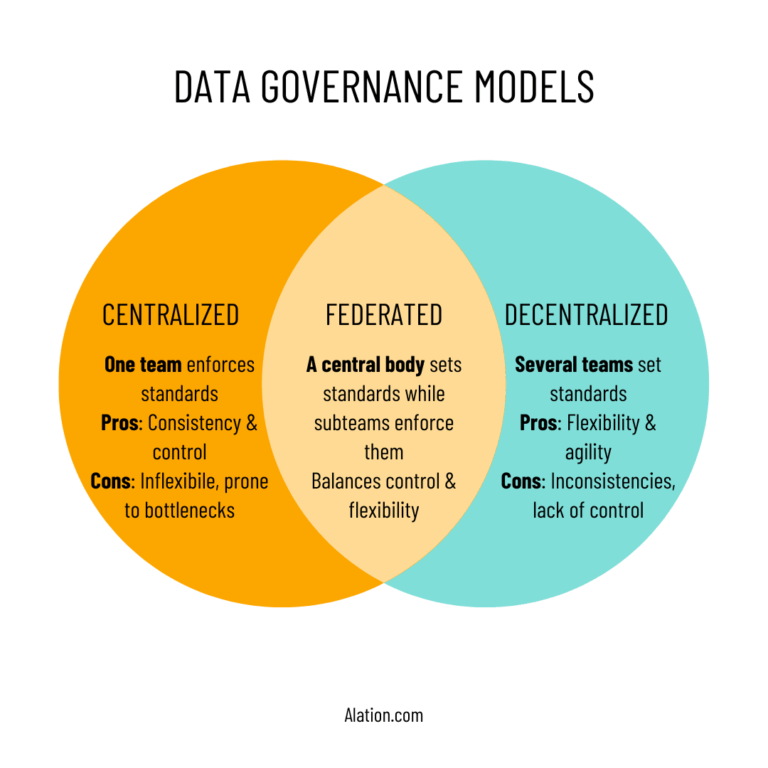
5. Data Governance as a Core Function
Modernization is incomplete without governance. Global companies now treat governance as a standard part of infrastructure design not a compliance afterthought.
Governance frameworks define
- Data ownership and roles
- Quality validation rules
- Security and access policies
6. Zero Trust Data Security
Security models are shifting from perimeter defense to continuous verification. Zero trust security ensures every access request is validated regardless of user location.
This protects enterprises as data moves across cloud systems devices and applications.
7. Serverless and Elastic Compute
Enterprises are replacing fixed servers with elastic scaling. Serverless data platforms automatically adjust resources based on workload demand reducing cost and improving performance.
This is especially valuable for AI and seasonal workload spikes.
Business Impact of These Trends
Companies deploying these modernization trends report
- Faster delivery of analytics projects
- Lower total cost of ownership
- Higher forecasting and decision accuracy
- Greater resilience against market disruption
Modernization is not just a technology shift it is a strategic advantage.
Frequently Asked Questions
How fast should enterprises adopt modernization trends Most trends become industry standard within three to five years. Early adoption produces the highest ROI.
Do these trends require full cloud migration No. Hybrid and multi cloud models allow gradual transitions.
Which trend delivers the fastest impact Real time data processing provides immediate performance gains across departments.
Conclusion
Enterprise data modernization is now a continuous journey. The organizations leading the future are not those with the most data but those with the most modern and adaptive infrastructure.
Call to Action
Stay ahead of global modernization shifts. Visit https://dataguruanalytics.org/data-infrastructure-consulting to design upgrade and optimize your enterprise data environment today.